
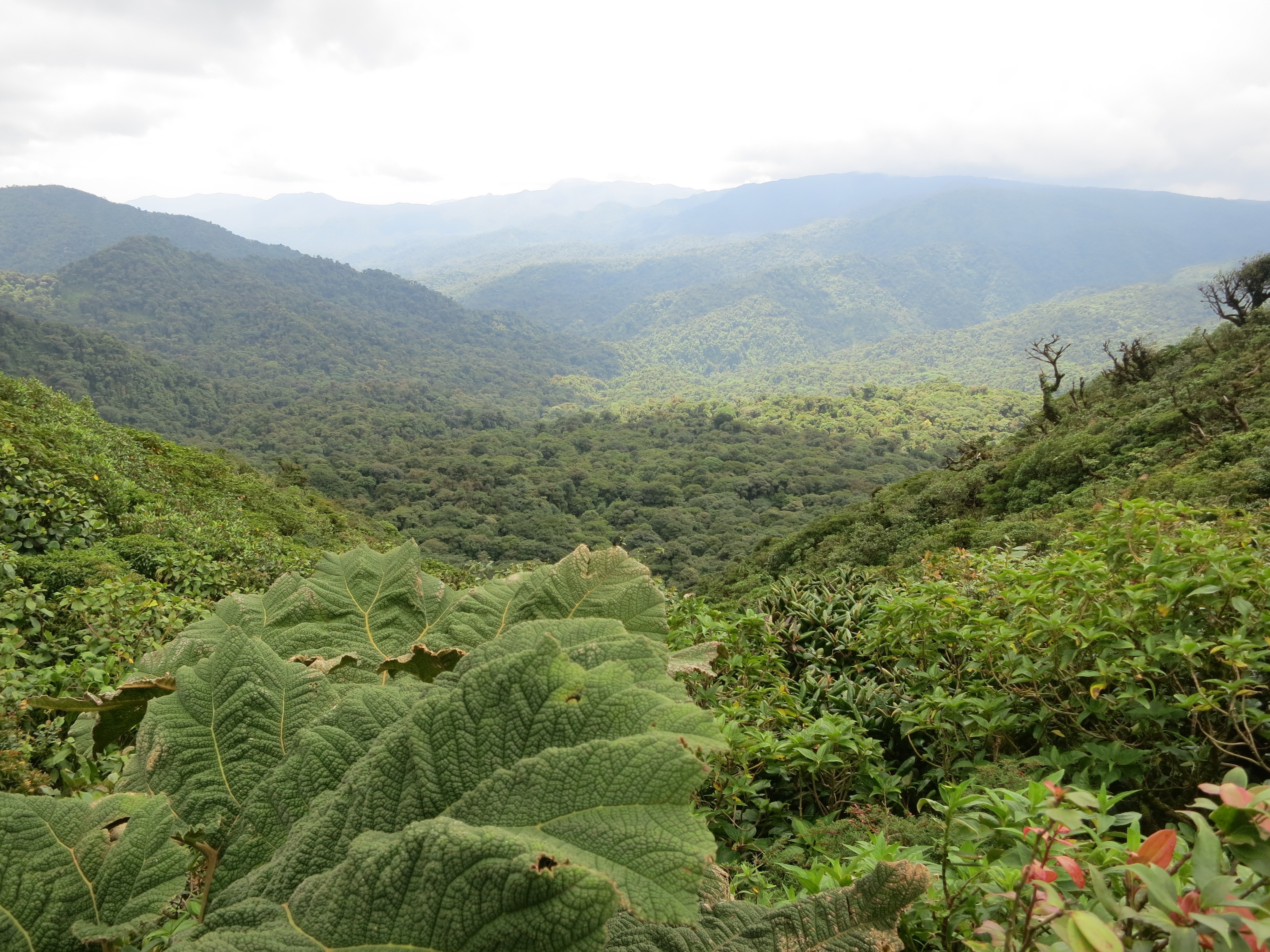
Recognized for its environmental leadership and extraordinary biodiversity, Costa Rica has built a development model based on the conservation and sustainable use of its natural resources. The country remains firmly committed to the environment and the protection of its ecosystems.
Artisanal and small-scale gold mining (ASGM) in Costa Rica is present in certain rural communities in the country, where it is a source of income for workers and their families. However, the sector faces environmental, social, and public health challenges, mainly associated with the historical, and in some cases still current, use of mercury in mineral processing. These conditions are exacerbated by levels of informality, limited access to clean technologies, and difficulties in integrating into formal markets and accessing financing. Since 2010, open-pit metal mining has been prohibited by law, with only underground mining and artisanal and small-scale mining permitted in specific areas under the current regulatory framework.
In this context, planetGOLD Costa Rica seeks to contribute to the progressive reduction of mercury use in the ASGM sector by strengthening technical capacities, promoting environmentally responsible practices, and supporting formalization processes within the national legal framework. The initiative is implemented in strict compliance with national legislation, prioritizing work with formalized actors or those in the process of formalization. The planetGOLD Costa Rica project is implemented in coordination with the competent authorities and in line with the National Action Plan on ASGM, as well as with the commitments made by the country under the Minamata Convention on Mercury, contributing to national efforts to protect human health and ecosystems from a perspective of equality, inclusion, and sustainability.
Key Figures from Costa Rica
-
35 tonnes Estimated mercury use in ASGM in Abangares
-
50% Costa Rica's 2030 ASGM mercury reduction goal
-
3000 Approximate number of ASGM miners
-
8.6 tonnes Mercury reduction goal of planetGOLD Costa Rica
Costa Rica's Approach
The planetGOLD Costa Rica project plans to reduce the negative environmental and social impacts caused by the intensive use of mercury in the ASGM sector.
The project will support activities in three priority areas of the country. The first includes communities located in Abangares, Miramar, Tilarán, and Montes de Oro. The second area, located in the south of the country, comprises communities in Osa and Puerto Jiménez. The third area, in the north of the country, includes the district of Cutris. Intervention strategies will be tailored to the characteristics and needs of each area. In addition, institutional strengthening activities will be carried out at the national level, primarily in the capital, San José.
The project will focus on reducing mercury use, building capacity, and supporting formalization processes, in strict compliance with national regulations. Furthermore, in areas affected by illegal mining or located in sensitive or protected zones, the project will neither support nor promote mining activities and will direct its efforts toward information generation, environmental monitoring, institutional strengthening, awareness-raising, and the promotion of alternative livelihoods, thereby helping to discourage illegal practices, in coordination with the competent authorities.
By the end of its implementation period, the project aims to reduce mercury use by 8.6 metric tonnes while strengthening land management practices and improving livelihoods for 28,000 people.
Key Strategies

Optimize formalization of | 
Promote financial inclusion and |

Enhance uptake of | 
Share knowledge and support |
Resources
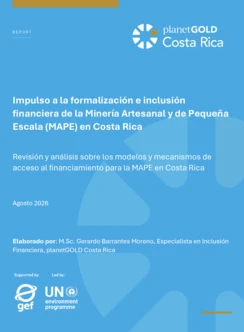
¿Cómo puede la MAPE acceder al financiamiento en Costa Rica?
planetGOLD Costa Rica
Este informe analiza las condiciones de acceso al financiamiento para la Minería Artesanal y de Pequeña Escala (MAPE) en Costa Rica. Examina las principales barreras que enfrenta el sector, las modalidades de financiamiento disponibles y distintos modelos y mecanismos que podrían adaptarse a sus características. También revisa experiencias nacionales e internacionales y sus principales lecciones, con el propósito de aportar elementos para el diseño de mecanismos de inclusión financiera que respondan a las necesidades de la MAPE.
Knowledge areas:
Countries:
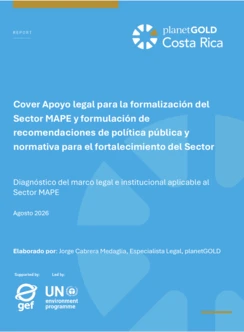
¿Qué dice el marco legal sobre la MAPE en Costa Rica?
planetGOLD Costa Rica Spanish
Este informe analiza el marco legal e institucional aplicable a la Minería Artesanal y de Pequeña Escala (MAPE) en Costa Rica, identificando las principales normas, regulaciones, oportunidades y barreras relacionadas con la formalización del sector. La revisión aborda disposiciones constitucionales, legislación minera y ambiental, normativa sobre salud, residuos, seguridad y otros instrumentos relevantes. A partir del análisis, el documento identifica vacíos y obstáculos regulatorios que pueden incidir en los procesos de formalización y plantea conclusiones y recomendaciones para fortalecer el marco normativo aplicable a la MAPE.
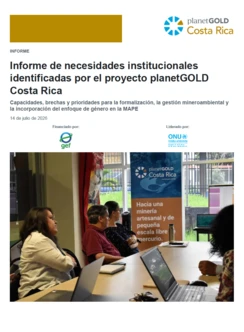
¿Qué necesita Costa Rica para fortalecer y formalizar la MAPE?
planetGOLD Costa Rica Spanish
Este informe identifica las principales capacidades, brechas y necesidades de las instituciones vinculadas con la formalización y la gestión socioambiental de la Minería Artesanal y de Pequeña Escala (MAPE) en Costa Rica. A partir de un análisis cualitativo e interinstitucional, identifica desafíos relacionados con la coordinación, las capacidades técnicas, la información, el monitoreo ambiental, el acompañamiento y la incorporación del enfoque de género. El documento propone prioridades para fortalecer la respuesta institucional y avanzar hacia procesos de formalización más accesibles, articulados e inclusivos.
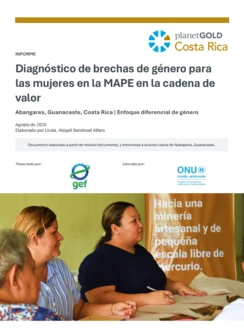
¿Dónde están las mujeres en la MAPE? Visibilizar su aporte y cerrar brechas
planetGOLD Costa Rica Spanish
Este diagnóstico analiza las brechas de género que enfrentan las mujeres vinculadas a la MAPE en Abangares, Guanacaste, a lo largo de la cadena de valor. El estudio evidencia su participación en actividades como procesamiento, administración, comercialización y valor agregado, pero también identifica desigualdades en el reconocimiento de su trabajo, acceso a recursos y financiamiento, capacitación, liderazgo, toma de decisiones, protección social y distribución de las responsabilidades de cuido. Los hallazgos buscan aportar evidencia para promover procesos de formalización y participación más equitativos e inclusivos.
Knowledge areas:
Countries:
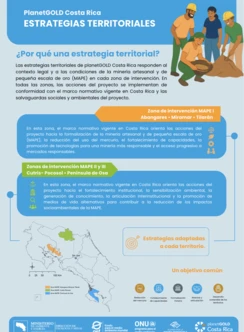
Estrategias territoriales de planetGOLD Costa Rica
planetGOLD Costa Rica EnglishSpanish
Conozca las estrategias territoriales que orientan las acciones de planetGOLD Costa Rica en las zonas de intervención MAPE.
Knowledge areas:
Countries:
Media Gallery


Other planetGOLD countries
planetGOLD project sites in Costa Rica